Aegis Living - Senior Care

4 ways to handle Sundowning

a man stretching his arm with he ocean in the background.

The most common symptoms of Alzheimer’s disease are memory loss and forgetfulness, but there are many other effects for people with dementia, and one of the most neglected issues is sundowning. Sundowning refers to a state of restlessness, confusion or irritability that occurs in the late afternoon and early evening, typically around dinner time. During this time of day, it can be difficult to get a senior to go to bed or simply sit still. Learning more about sundowning can help you cope with the situation. And the results of light therapy are gaining recognition.

What is Sundowning?

It’s well known that seniors with Alzheimer’s become increasingly restless as the sunlight fades, but the exact science behind this is still somewhat of a mystery. Many researchers believe that it is caused by changes in the brain related to Alzheimer’s that throw off the biological clock and puzzle the circadian rhythm.

There are also other factors that can potentially lead to sundowning. Depression, for example, can lead to trouble sleeping that may cause one to become agitated and anxious when other people are typically calming down for the evening. Excessive thirst or other unmet physical needs may cause one to become irritable, and can cause pain or simple boredom.

4 Tips to deal with Sundowning

There are many ways a caregiver can help seniors find calm when sundowning sets in.

  1. Recognize the signs: The first step is to recognize the signs by being particularly attentive in the late afternoons and early evenings, and keeping an eye out for pacing, yelling and other signs of enhanced agitation.
  2. Listen: It’s important to listen to them calmly and understand his or her frustrations. You might find that your parent is hungry, has a bothersome ache or is experiencing another issue. Some discover that the issue causing the irritable behavior is easy to resolve. If this doesn’t help ease the symptoms of sundowning there are other small things that can be done to make the environment more conducive to relaxation and tranquility.
  3. Quiet Time: Try to make early evening a quiet time by playing soft music and using gentle lighting that minimizes shadows. Reduce any clutter and noise that may serve as an irritant.
  4. Distraction: Keep an agitated senior distracted with a favorite activity such as solving a crossword puzzle or even a simple task like doing the dishes or folding towels. Having purpose and making a contribution in the household can result in loved ones feeling needed and appreciated.

Life Enhancing Light Therapy at Aegis Living

Preventing sundowning from occurring in the first place is the best option. One of the many unique aspects of Alzheimer’s care at Aegis Living is Life Enhancing Light Therapy, which was tested at the Aegis Living Bellevue.

Developed to diminish the effects of dementia and depression, this technique also helps ward off sundowning. The concept behind the strategy is that daily exposure to specific spectrums of light has the capacity to reduce anxiety and agitation. High-intensity track lighting exposes individuals to rays during breakfast and the early afternoon, simulating sunlight to keep seniors’ circadian rhythms in check. Each light provides residents with between 2,000 and 4,000 lux (a unit of illumination measurement). Dawn simulators inside individual apartments can help soothe residents to a place of serenity in the late afternoon as they prepare to end the day and retire to bed. Another element in light therapy intervention is the integration of tryptophan into residents’ diets. This amino acid is widely believed to aid in sleep. Seniors can also get their vitamin D levels checked regularly and receive foods high in vitamin B and omega-3 fatty acids, nutrients generally obtained through contact with sunlight.

Life enhancing light therapy can also moderate seasonal affective disorder and depression, other conditions that can lead to sundowning, as well as improving general mood and sleep schedules. In addition, it’s worth noting that preliminary studies on light therapy showed that light intervention worked to improve the quality of life among those who care for people with Alzheimer’s, and happier assisted living staff are better equipped to properly care for seniors with Alzheimer’s and other conditions.

Other ways Aegis Living eases early evening irritability

As noted earlier, there are plenty of other factors that can lead seniors to become restless in the late afternoon and early evening, and Aegis Living takes these circumstances into account. Residents of Aegis Living communities benefit from the community’s strong focus on keeping residents hydrated – water dispensers are located throughout the building to ensure seniors have easy access to fluids at all times of the day. This can greatly reduce instances of sundowning caused by unmet physical needs. Additionally, the attentive staff are cognizant of the symptoms of sundowning and trained to detect symptoms. That means if your mother is uncomfortable or irritated due to external factors, an Aegis Living staff member will be there to listen to her complaints and work to make her feel relaxed in her surroundings.

Another element that can help reduce instances of sundowning is the nurse care provided at all Aegis Living communities. Community Nurses, Care Directors and care staff who notice signs of sundowning can implement plans to support diminishing symptoms.


<< Back to Blog

Related Posts

Share Your Story

Fall dining menu with breakfast and seasonal entrées.
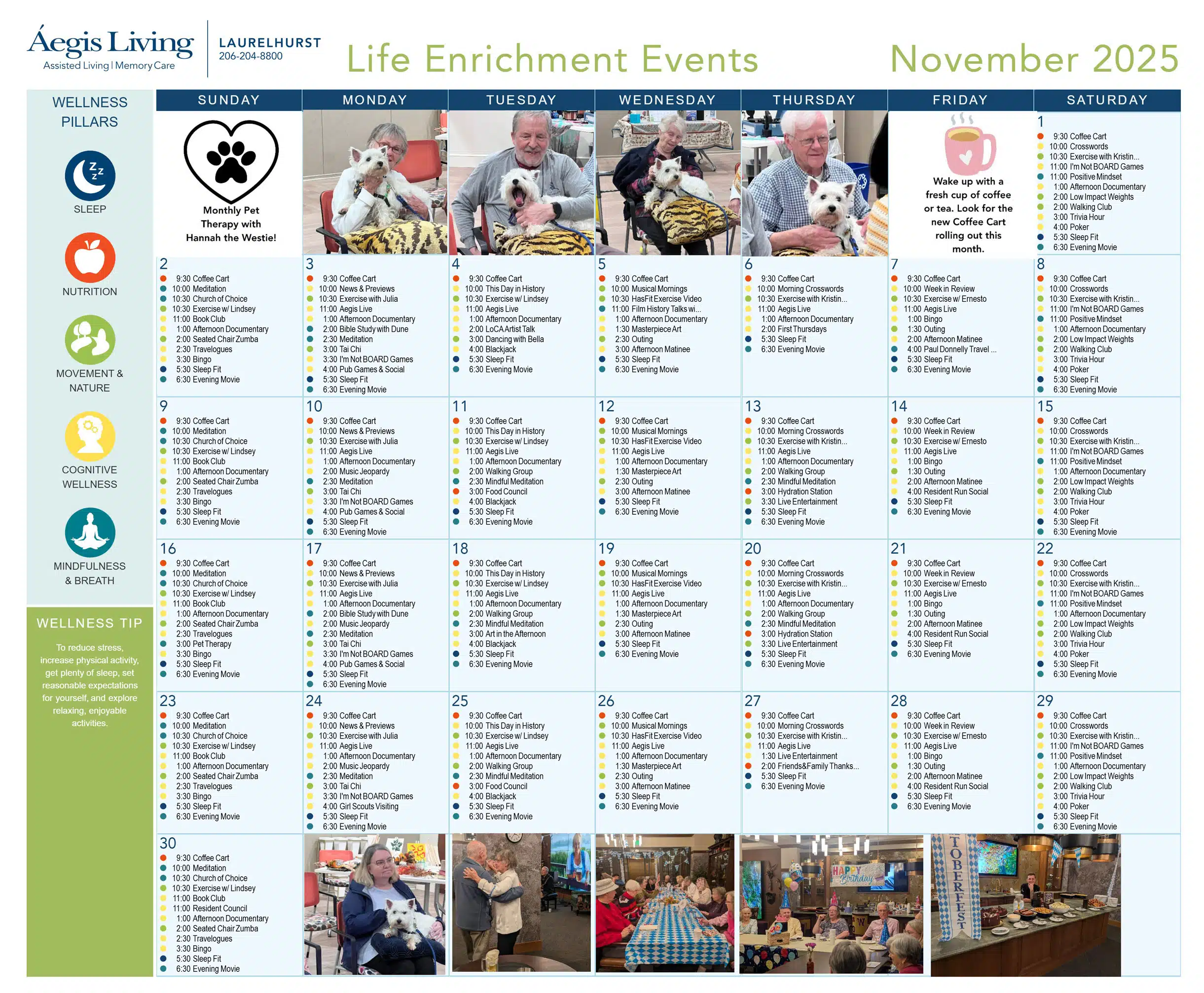
Aegis Living November 2025 events calendar with activities.
AUGi is a discreet, wall-mounted smart device that uses AI technology to track movement and detect potential fall risks. Whether sensing when someone is getting out of bed or recognizing that a fall has occurred, AUGi instantly alerts our care team so help arrives right away. This proactive approach gives residents added safety and families peace of mind.
Restore Red Light Therapy offers a safe, natural way to support health and vitality. This non-invasive treatment reduces inflammation, eases pain, improves mobility, enhances sleep, and rejuvenates skin. By promoting healing and energy at the cellular level, it helps residents feel their best—every single day.

Respite Care

Respite Stays & Day Stays give family caregivers a real break—hours, days, or a few weeks—while your loved one enjoys a safe, enriching short‑term home at Aegis Living. Guests settle into a beautifully furnished private apartment and have 24/7 care staff and onsite nurses, medication management, and discreet safety technology (motion sensors, medical‑alert pendants, visitor check‑in) for peace of mind. Each day feels purposeful with chef‑prepared, all‑day dining and 200+ monthly activities—from book clubs and fitness classes to movie nights—plus full use of the community. We coordinate with your loved one’s physicians to mirror their routines and care, so the stay feels familiar. It’s also a smart trial run for senior living: meet neighbors, test services, and see what supported independence looks like—without a long‑term commitment. Choose a Respite Stay when you’re traveling or need time to recharge, when your loved one would benefit from structure, social connection, and great meals, or when you both want peace of mind while keeping options open.

Hospice Care

Hospice & End‑of‑Life Care at Aegis Living is comfort‑first support for the final stage of life, delivered in your loved one’s private apartment by our 24/7 care team in coordination with a trusted local hospice provider you choose (or we can recommend). Together, we create a coordinated care plan that manages pain and other symptoms, oversees medications, and provides calm, dignified help with daily needs, while offering compassionate emotional support for both resident and family. Discreet safety measures and a reliable medical‑alert system bring help quickly; chef‑prepared, in‑apartment meals adapt to changing appetites. Families are guided through decisions and moments of closure so they can focus on being present in a peaceful, home‑like setting. If your loved one already lives at Aegis, they can remain in the comfort of their home, avoiding disruptive moves. Choose this level of care when curative treatment is no longer the goal and you want expert symptom control, hands‑on daily support, and a setting that protects dignity and prioritizes comfort, meaning, and time together.

Transitional Care

Transitional Care is Aegis Living’s bridge for early memory loss—made for people who are still social and independent but benefit from structure, reminders, and gentle support. Residents remain in assisted living with full access to amenities and friendships, while dementia‑trained team members are available 24/7 for cueing, medication management, wayfinding, and compassionate redirection when confusion arises. Onsite nurses monitor health and adjust a personalized care plan as needs evolve, and discreet safety technology like motion sensors, medical‑alert pendants, and a visitor check‑in system, adds reassurance without sacrificing freedom. Nutrition and hydration stay on track with chef‑prepared meals, seasonal menus, and all‑day options, and days are filled with meaningful activities that build confidence and connection. Couples can stay together even with different care needs. If symptoms progress, a seamless transition to our secured Life’s Neighborhood Memory Care is available with the same trusted team. Choose Transitional Care when your loved one is missing medications, repeating questions, or feeling anxious alone but does not yet require a secured Memory Care setting—it’s the right support, at the right time.

Memory Care

Memory Care is specialized, secure support for people living with Alzheimer’s or other dementias who benefit from a calm, structured environment and round‑the‑clock expertise. At Aegis Living, that care happens in Life’s Neighborhood—an intimate, thoughtfully designed setting where 24/7 dementia‑trained caregivers and a nursing team on site seven days a week deliver personalized help with daily living, medication management, and mobility (including Hoyer lifts and two‑person transfers), while gently redirecting agitation and confusion. Days are purpose‑filled with science‑based cognitive programming, certified music therapy, and social activities; chef‑prepared meals are easy to enjoy and dining spaces and cues are designed for memory support. Discreet safety features like secured entrances, emergency pendants with fall detection, and optional motion sensors, prevent wandering and bring peace of mind, and visiting physicians and wellness professionals reduce trips off‑site. Families receive education and ongoing support. If your loved one is unsafe alone, missing medications, wandering, needs frequent cueing or hands‑on help with bathing or dressing, or thrives with a predictable routine, Memory Care offers the right level of care. For milder needs, our transitional Assisted Living can be a first step; for advancing symptoms, secured Memory Care provides the specialized, heartfelt support to help them feel calm, connected, and at home.

Assisted Living

Assisted Living is ideal when you—or a loved one—want to stay independent but need daily help to live safely and well. It combines a private apartment with 24/7 caregivers who provide personalized support with activities of daily living (bathing, dressing, medications, mobility, including two‑person transfers and Hoyer lifts when needed). A nursing team on site seven days a week builds a tailored care plan, with visiting physicians and onsite physical, occupational, and speech therapy available for added peace of mind. Meanwhile, we handle the details like chef‑prepared, dietitian‑designed all‑day dining, housekeeping, laundry, transportation, and concierge services, so residents can focus on community and purpose in beautifully designed spaces with fitness classes, clubs, and daily activities. Care scales up or down as needs change (so you only pay for the support you use). If you don’t require the constant medical care of a nursing home but want more help than independent living provides, Assisted Living delivers the care, comfort, and community to help you thrive.
Light Assisted Living is for adults who are largely independent and want the ease of maintenance‑free living with a trusted safety net close by. You’ll keep your own routine in a private apartment while we handle the hassle like chef‑prepared, dietitian‑designed all‑day dining, weekly housekeeping and laundry, concierge help, and scheduled transportation to appointments and outings. Our on‑site team is available 24/7 for occasional support—think medication reminders, a steady arm for bathing or dressing, or short‑term help after an illness—without the intensity of higher‑level care. Stay active with a full calendar of fitness, arts, clubs, and curated excursions; stay well with visiting physicians and optional physical, occupational, and speech therapy through our EmpowerMe Wellness partnership. Emergency call systems, elevators, and discreet mobility support add peace of mind. It’s the right fit if you don’t need Memory Care or frequent hands‑on assistance, but want community, convenience, and the assurance that more support can scale up if your needs change. Couples with different care needs can remain together with personalized plans.