It seems as the temperatures change that we find ourselves craving warm comfort foods—calorie-laden coffee drinks, pumpkin spice sweet treats, thick creamy soups, and cheesy casseroles. To indulge in a calorie-packed favorite treat every now and then is fine. The trick is keeping your meals balanced with plenty of fresh fruits and vegetables. As a caregiver, this means preparing a variety of lean proteins, complex carbohydrates, fiber-rich fruits and vegetables, with a bit of healthy fat for your loved ones, while keeping easy-to-grab healthy snacks around the house for your family.
As we enter into a new season, it is a good time of year to examine the overall nutrition and health of your aging parent. Whether you are a primary caregiver who does the shopping and makes meals or if you are simply concerned about their daily nutrition, there are a few things to keep in mind when it comes to your aging loved one’s diet.
Well-Balanced Meals
Food rich in fiber, minerals, vitamins, and nutrients is vital to maintain good health at any age, but it can be particularly important for your elderly parent. Creating balanced meals for your family may help your parent keep a healthy weight, energize them for the day, and may lower their risk of developing a chronic health condition like heart disease or diabetes. Malnutrition in the elderly can weaken bones, their immune system, and muscle tone leaving them vulnerable to illness and injury.
When planning your meals, focus on foods that are nutrient-dense and high in fiber such as vegetables, fruit, whole grains, nuts, beans, dairy, and lean protein. Reducing sodium, and the excess calories of added sugar, may help prevent chronic conditions such as high blood pressure or diabetes.
Cut the Calories
In an effort to maintain a healthy weight, most seniors need to consume fewer calories throughout the day. As your parent ages, their activity level will drop significantly. They will burn fewer calories during the day. In addition, they often lose muscle mass and tone so their metabolism will slow down. This combination means that your parent’s daily caloric needs may decrease.
Conversely your parent may also lose their appetite due to the side effects of some medications. A reduced sense of smell and taste that happens with age may also make food less appealing. If your loved one no longer enjoys the comforting aroma of a fresh pot of coffee, a Sunday afternoon stew, or warm cookies from the oven, this can decrease their appetite leading to poor nutrition, impaired immunity, weight loss, and may impact their quality of life. To improve the taste, many seniors will use excess salt or heaping spoons of sugar, which can lead to high blood pressure or diabetes. Try adding herbs and spices to increase flavor but not calories.
It’s a balancing act to provide food that is appetizing, rich in nutrients, and not too high in calories. As you make your meal plans, consider the number of calories in the meals and if those calories are made up of quality ingredients with a nutritional punch.
Hydration
A normal part of the aging process that few caregivers may be aware of is thirst in seniors decreases with age. Your parent may no longer have this trigger to remind them to drink water or liquids throughout the day. Take extra steps to entice them to drink fluids. Dehydration in the elderly has been known to cause behavioral issues like increased confusion, depression, and anxiety. In your meal planning, serve foods like broth soups, low-fat milk, sliced fruit, flavored waters, and blended smoothies to encourage hydration. Whole fruits and vegetables like watermelon, celery, and bell peppers are also a great way to add fiber and hydration.
Packed Full of Nutrients
Two essential nutrients to keep in mind for your aging loved ones are Calcium and Omega 3 Fatty Acids. Foods that are rich in Omega 3 Fatty Acids include walnuts, canola oil, flaxseeds, and flaxseed oil, and many types of fish. The benefit of Omega 3 Fatty Acids is reducing inflammation. Inflammation has been proven to contribute to cancer, heart disease, joint pain, and painful arthritis. As you plan your meals for the week, try to incorporate a meal rich in Omega 3 at least two times per week.
A second important nutrient is calcium. Calcium is the cornerstone for bone health. It is recommended by the National Institutes of Health that adults over the age of 50 get at least 1000 milligrams of calcium per day. Leafy greens such as kale, dairy products, and fortified fruit drinks are all rich in calcium. Also, keep in mind that vitamin D is essential for the body to absorb calcium. The easiest way to get a dose of vitamin D is to sit outside in the sunshine. We recommend that you consult with their physician to see if a supplement for Omega 3 or calcium and vitamin D would benefit your aging parent.
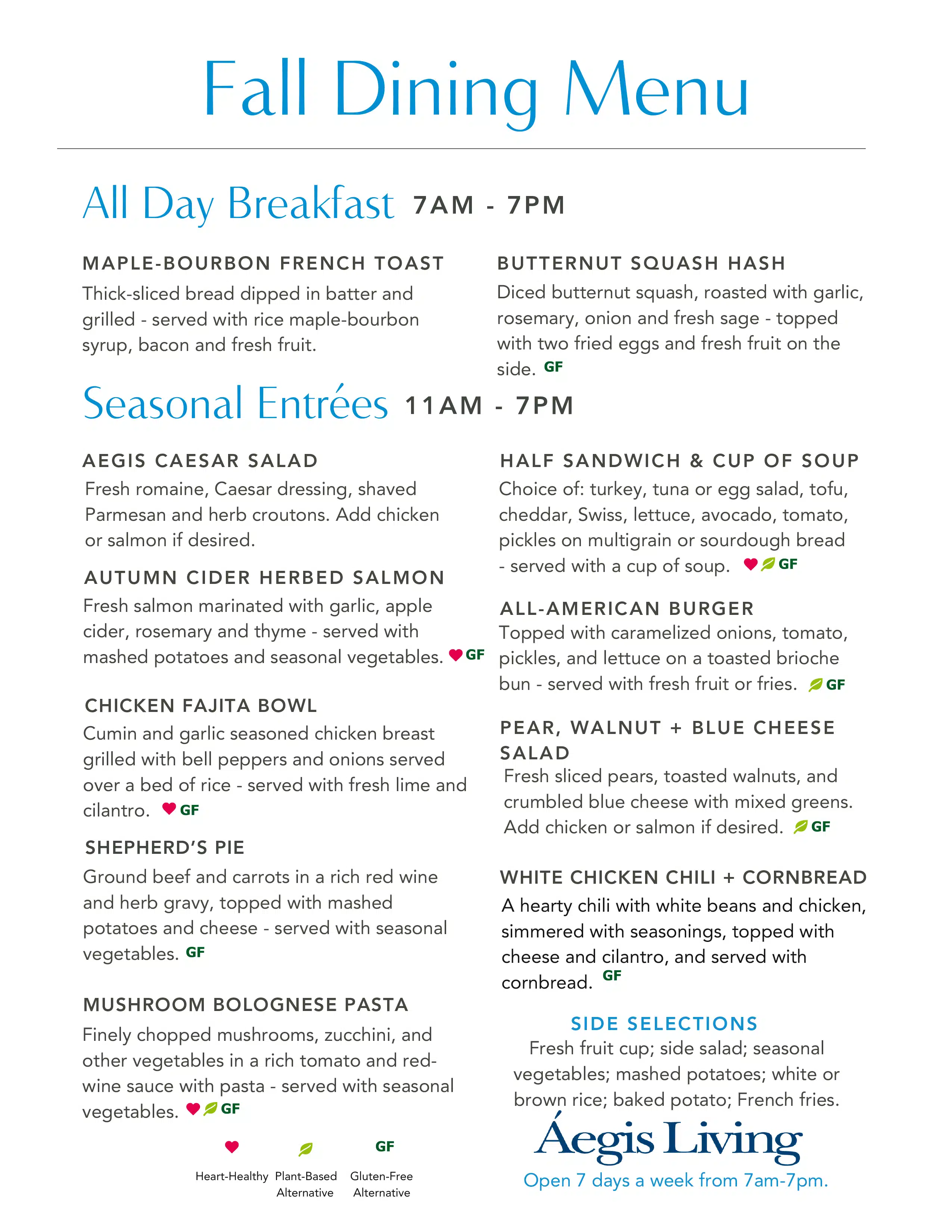
When visiting your local Aegis Living community ask the Chef about their nutrition meal plans and stay for lunch.