Understanding Alzheimer’s: Signs, Progression, and Comfort Through Care
Learn what Alzheimer’s disease is, how it differs from other forms of dementia, what symptoms to watch for, and how treatments and supportive care can help at every stage.


By now you know how important a healthy lifestyle is for your well-being and longevity. And while a healthy diet is a major contributing factor, exercise is just as important and often overlooked. According to a CDC report in 2018, only 23% of U.S. adults get the proper amount of exercise. Adults 18-64 should be exercising for 2.5 hours each week. That includes aerobic physical activity and muscle-strengthening activities. Older adults who can no longer commit to 2.5 hours per week should be as physically active as they can be.
While health conditions can get in the way of a vigorous routine, seniors can still participate in low-impact exercises that will have impactful benefits over time.
Falls are the leading cause of head injuries and broken hips in adults 65 and older. However, falls may be preventable! Balance-centric and flexibility focused exercises such as yoga and tai chi improve muscle strength and bone density. Additionally, range of motion and flexibility degenerate over time. If a joint can’t operate as needed, the body will put pressure on another part to pick up the slack, which could lead to additional strain or injury.
Both cardio and strength training exercises increase blood flow to the heart and lowers blood pressure. Seniors will find their endurance and energy levels increase, making it easier to perform daily chores, hobbies, and activities. Exercise also improves respiratory function, leading to strong lungs and airways.
Even gentle exercise has a major impact on the development of disease. Regular exercise sends oxygen to muscles and organs and removes waste. Both vascular dementia and Alzheimer’s disease are attributed to a buildup of plaque in the brain. Studies have found that older adults who don’t exercise are more likely to develop dementia than those who do exercise.
Other chronic conditions can be regulated or managed with exercise. A stroke can be prevented through diet and exercise. Those with Parkinson’s can maintain balance and coordination, extending their independence. Exercise has also been shown to lower blood sugar in those with type 2 diabetes.
Fifty-four million Americans have osteoporosis, a disease of the bone where those afflicted lose too much bone mass and make too little bone tissue. While losing bone density is a normal part of aging, those with osteoporosis have an increased risk of fracture due to the disease—one in two women and one in five men will break a bone as a result. Regular exercise such as walking, or jogging can help increase bone strength.
Arthritis is one of the most common causes of disability among U.S. adults. Not only will exercise help you lose weight, which will take stress off your joints, but it will strengthen the muscles that support those joints.
Group exercise such as walking clubs, water aerobics, yoga, etc. offer a great opportunity to socialize. Isolated seniors can experience loneliness and depression, which can lead to other health issues. Exercise also releases endorphins triggering a feeling of euphoria, which has been known to help reduce stress, ward off anxiety and depression, boost self-esteem and improve sleep.
Aegis Living’s Life Enrichment program offers many daily exercise options for seniors of all abilities to improve strength, coordination, and balance for healthy aging. To learn more about how our programs improve the body, mind, and spirit, contact a Life Enrichment Director at your nearest Aegis Living community.




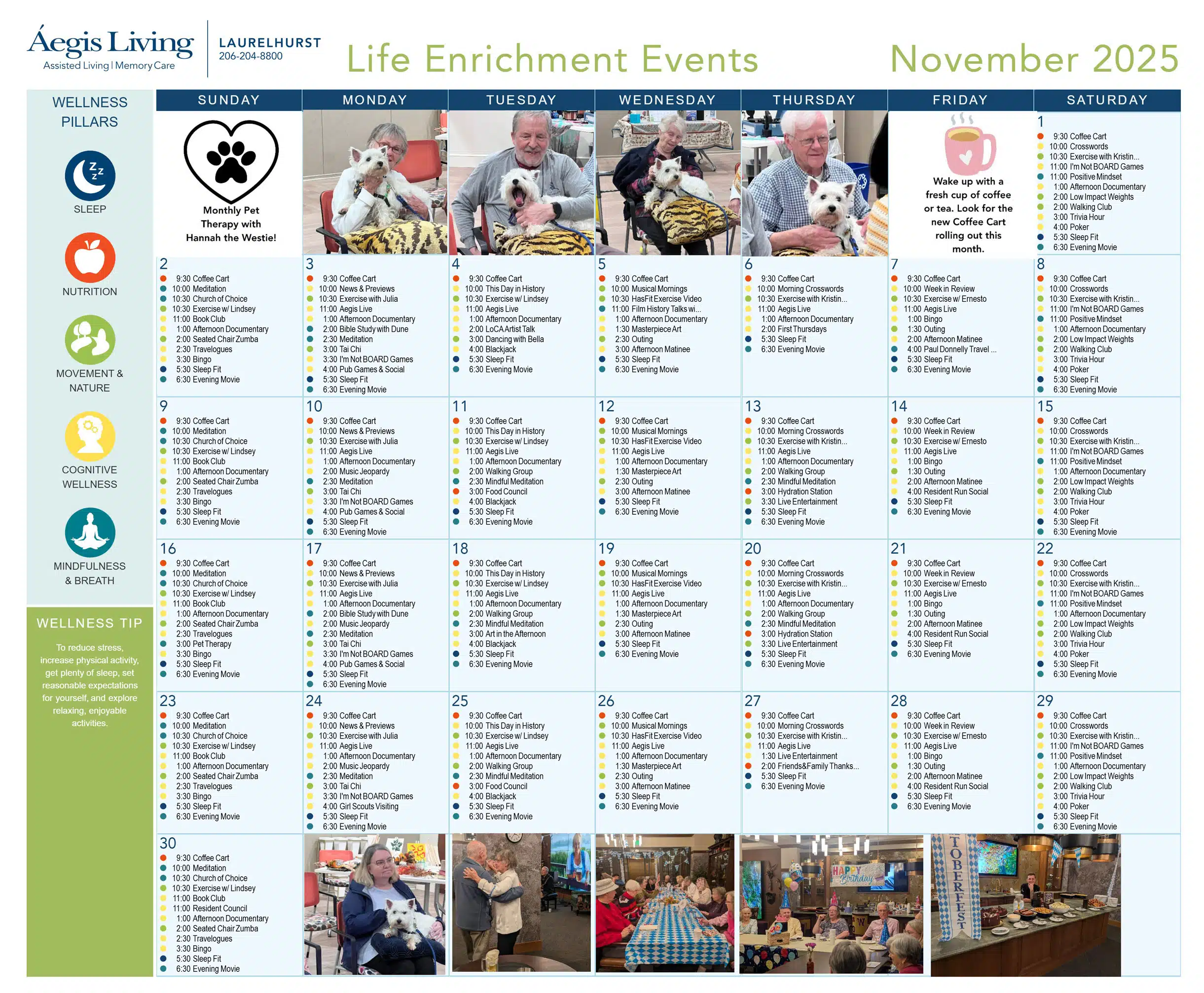
Respite Stays & Day Stays give family caregivers a real break—hours, days, or a few weeks—while your loved one enjoys a safe, enriching short‑term home at Aegis Living. Guests settle into a beautifully furnished private apartment and have 24/7 care staff and onsite nurses, medication management, and discreet safety technology (motion sensors, medical‑alert pendants, visitor check‑in) for peace of mind. Each day feels purposeful with chef‑prepared, all‑day dining and 200+ monthly activities—from book clubs and fitness classes to movie nights—plus full use of the community. We coordinate with your loved one’s physicians to mirror their routines and care, so the stay feels familiar. It’s also a smart trial run for senior living: meet neighbors, test services, and see what supported independence looks like—without a long‑term commitment. Choose a Respite Stay when you’re traveling or need time to recharge, when your loved one would benefit from structure, social connection, and great meals, or when you both want peace of mind while keeping options open.
Hospice & End‑of‑Life Care at Aegis Living is comfort‑first support for the final stage of life, delivered in your loved one’s private apartment by our 24/7 care team in coordination with a trusted local hospice provider you choose (or we can recommend). Together, we create a coordinated care plan that manages pain and other symptoms, oversees medications, and provides calm, dignified help with daily needs, while offering compassionate emotional support for both resident and family. Discreet safety measures and a reliable medical‑alert system bring help quickly; chef‑prepared, in‑apartment meals adapt to changing appetites. Families are guided through decisions and moments of closure so they can focus on being present in a peaceful, home‑like setting. If your loved one already lives at Aegis, they can remain in the comfort of their home, avoiding disruptive moves. Choose this level of care when curative treatment is no longer the goal and you want expert symptom control, hands‑on daily support, and a setting that protects dignity and prioritizes comfort, meaning, and time together.
Memory Care is specialized, secure support for people living with Alzheimer’s or other dementias who benefit from a calm, structured environment and round‑the‑clock expertise. At Aegis Living, that care happens in Life’s Neighborhood—an intimate, thoughtfully designed setting where 24/7 dementia‑trained caregivers and a nursing team on site seven days a week deliver personalized help with daily living, medication management, and mobility (including Hoyer lifts and two‑person transfers), while gently redirecting agitation and confusion. Days are purpose‑filled with science‑based cognitive programming, certified music therapy, and social activities; chef‑prepared meals are easy to enjoy and dining spaces and cues are designed for memory support. Discreet safety features like secured entrances, emergency pendants with fall detection, and optional motion sensors, prevent wandering and bring peace of mind, and visiting physicians and wellness professionals reduce trips off‑site. Families receive education and ongoing support. If your loved one is unsafe alone, missing medications, wandering, needs frequent cueing or hands‑on help with bathing or dressing, or thrives with a predictable routine, Memory Care offers the right level of care. For milder needs, our transitional Assisted Living can be a first step; for advancing symptoms, secured Memory Care provides the specialized, heartfelt support to help them feel calm, connected, and at home.