Aegis Living - Senior Care

Does Alcohol Cause Dementia?

alcohol dementia

Determining whether a senior has a drinking problem can be challenging.  Shaky hands, unsteady on their feet, or forgetfulness can be signs of normal aging, but these can also be signs of alcohol or substance abuse. If you suspect your parent has a drinking problem is it important to intervene before it becomes alcohol-induced dementia.


According to the National Institute on Alcohol Abuse and Alcoholism (NIAAA), elderly adults are the fastest-growing group of problem drinkers.  The reasons vary from depression, boredom during retirement, sadness from losing a spouse, to anxiety over finances, loss of social connections, or perhaps they have abused all their lives, and now it’s harder to continue to hide.  Also, normal alcohol consumption for an adult male in his 40’s has a much different effect on a senior in his 70’s.  An elderly drinker’s blood alcohol level (BAL) increases more quickly than a younger person’s BAL.  A senior’s liver will metabolize alcohol more slowly, and their brains are more susceptible to the effects of an alcoholic drink.

Drinking can have detrimental effects on a senior’s health.  It can exacerbate some diseases among seniors, including diabetes, heart disease, and hypertension.  Alcohol abuse can increase the risk of stroke and several types of cancer.  And alcohol can reduce the effectiveness or interfere with their prescribed medications.  Prescription drugs combined with alcohol can be deadly for any age but extremely serious for the elderly.  But many don’t realize that excessive alcohol abuse can also cause alcohol-induced dementia.

What is alcohol-induced dementia?

Alcohol-induced dementia is caused by prolonged and excessive alcohol consumption that causes neurological damage. As much as 20% of seniors diagnosed with dementia is caused by alcohol abuse.  The good news is even though alcohol dementia is progressive, it can be reversed or halted if the alcoholic stops drinking (this should always be done under medical supervision).  But they need to stop drinking entirely for their cognitive abilities to return partially or if they are lucky, entirely.  But the bad news is there is also a point of no return for alcohol-induced dementia when the brain is too damaged and beyond repair.

The most common form of alcohol-related dementia is a combination of two different conditions, Wernicke’s encephalopathy, and Korsakoff’s dementia.  A person can develop one or the other condition, or both can occur together.   These are caused by a deficiency of thiamine (vitamin B1).  Alcohol prevents a person’s body from adequately absorbing this vital vitamin for brain function.  Thiamine helps the brain produce energy from sugar.  But if there is a deficiency in thiamine, brain cells do not produce enough energy to function.

Wernicke’s encephalopathy causes imbalance, loss of coordination, confusion, abnormal eye movement, double vision, and eyelid drooping.  Korsakoff’s dementia is a cluster of memory and cognitive difficulties and is longer lasting. It’s characterized by gaps in memory, making up lies or confabulation to fill in the gaps, inability to form new memories, hallucinations, and struggling to learn new information.

Can a doctor test for alcohol-induced dementia?

Your parent can be tested for alcohol-induced dementia. A doctor can examine their nervous/muscular system to reveal any damage.  This is what they look for:

  • Abnormal eye movement (back and forth)
  • Decreased or abnormal reflexes
  • Fast heart rate
  • Low blood pressure
  • Low body temperature
  • Muscle weakness
  • Problems with coordination or walking gait

Many who suffer from alcoholism are often poorly nourished, and tests can check their nutrition levels:

  • Serum albumin (general nutrition)
  • Serum vitamin B1 levels
  • Transketolase activity in red blood cells
  • Liver enzymes may be high

What’s the treatment?

Because of their depletion of vitamin B, thiamine supplement can either be taken orally or by injection to restore this vitamin to the brain.  This treatment has shown to improve diminishing brain function and, in some cases, fully return.  According to the Alzheimer’s Association, approximately 75 percent of people suffering from alcohol-induced dementia do recover to some degree if the condition is found and treated promptly.   This is hopeful news for caregivers who are dealing with elderly parents who are suffering from dementia connected to alcohol abuse.  In situations, where their dementia has progressed too far for intervention, caregivers will need to do their best to make their mom or dad feel safe and comfortable.

Because of the seriousness of this condition to their health, anyone who is an alcoholic and chooses to stop drinking should do so under the supervision of a healthcare professional.  Hospitalization is generally recommended for detoxification of elderly adults.  Following detoxification, your parent should receive treatment from an inpatient program, day treatment, outpatient therapy, or community-based program.  Better results come from joining an elderly-specific treatment program who can cater to their unique circumstances.  Studies have shown that elderly problem drinkers can benefit from treatment and more easily change their dementia symptoms than any other cause of dementia.

How should I talk to my parent about their alcoholism?

The National Council of Alcoholism and Drug Dependence offers helpful tips on their website on how to start a discussion about this sensitive topic while avoiding arguments or making them feel guilty.  Try to avoid having this conversation while they have been drinking because this is not the right time for them to absorb information and it may frustrate you more. Choose your words carefully and let them know you are supportive and on their side.  You don’t need to think in terms of an intervention, a series of mini-conversations where you focus on your observations of their behavior or health might be more readily accepted.

As the caregiver of an alcoholic parent, it is important to practice self-care.  Take a break when you need to. Get plenty of sleep, exercise, and eat healthy to keep up your strength.  You don’t have to do this alone—talk with other family members for support or consult with a therapist or join a support group.  Don’t forget that your health is just as important as your parent’s health and wellbeing.

Our expert nurses can help answer more questions you have about caring for a senior with alcohol-induced dementia.  Contact your local Aegis Living community and ask to speak to one of our nurses for advice and referrals.

<< Back to Blog

Related Posts

Share Your Story

Fall dining menu with breakfast and seasonal entrées.
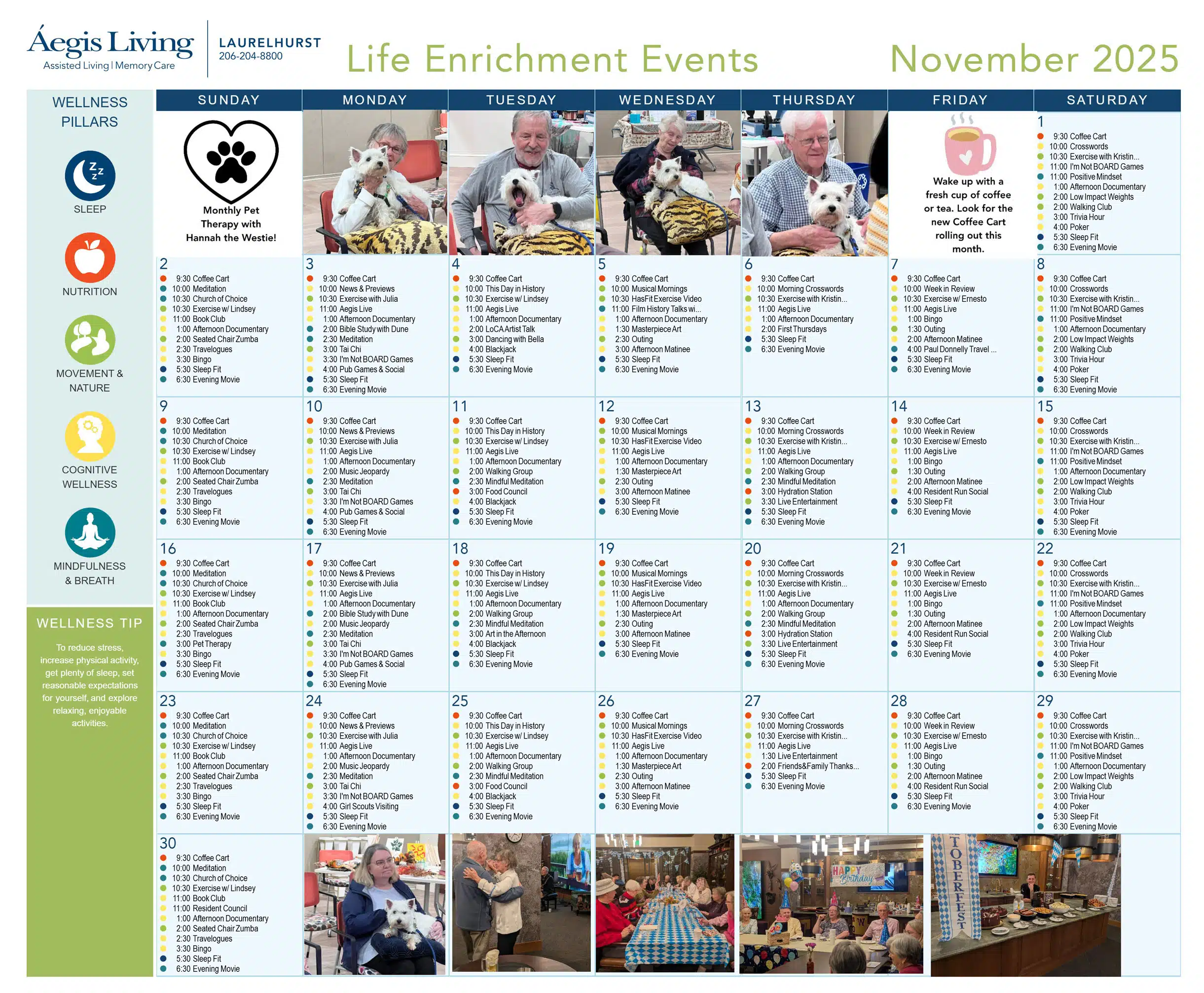
Aegis Living November 2025 events calendar with activities.
AUGi is a discreet, wall-mounted smart device that uses AI technology to track movement and detect potential fall risks. Whether sensing when someone is getting out of bed or recognizing that a fall has occurred, AUGi instantly alerts our care team so help arrives right away. This proactive approach gives residents added safety and families peace of mind.
Restore Red Light Therapy offers a safe, natural way to support health and vitality. This non-invasive treatment reduces inflammation, eases pain, improves mobility, enhances sleep, and rejuvenates skin. By promoting healing and energy at the cellular level, it helps residents feel their best—every single day.

Respite Care

Respite Stays & Day Stays give family caregivers a real break—hours, days, or a few weeks—while your loved one enjoys a safe, enriching short‑term home at Aegis Living. Guests settle into a beautifully furnished private apartment and have 24/7 care staff and onsite nurses, medication management, and discreet safety technology (motion sensors, medical‑alert pendants, visitor check‑in) for peace of mind. Each day feels purposeful with chef‑prepared, all‑day dining and 200+ monthly activities—from book clubs and fitness classes to movie nights—plus full use of the community. We coordinate with your loved one’s physicians to mirror their routines and care, so the stay feels familiar. It’s also a smart trial run for senior living: meet neighbors, test services, and see what supported independence looks like—without a long‑term commitment. Choose a Respite Stay when you’re traveling or need time to recharge, when your loved one would benefit from structure, social connection, and great meals, or when you both want peace of mind while keeping options open.

Hospice Care

Hospice & End‑of‑Life Care at Aegis Living is comfort‑first support for the final stage of life, delivered in your loved one’s private apartment by our 24/7 care team in coordination with a trusted local hospice provider you choose (or we can recommend). Together, we create a coordinated care plan that manages pain and other symptoms, oversees medications, and provides calm, dignified help with daily needs, while offering compassionate emotional support for both resident and family. Discreet safety measures and a reliable medical‑alert system bring help quickly; chef‑prepared, in‑apartment meals adapt to changing appetites. Families are guided through decisions and moments of closure so they can focus on being present in a peaceful, home‑like setting. If your loved one already lives at Aegis, they can remain in the comfort of their home, avoiding disruptive moves. Choose this level of care when curative treatment is no longer the goal and you want expert symptom control, hands‑on daily support, and a setting that protects dignity and prioritizes comfort, meaning, and time together.

Transitional Care

Transitional Care is Aegis Living’s bridge for early memory loss—made for people who are still social and independent but benefit from structure, reminders, and gentle support. Residents remain in assisted living with full access to amenities and friendships, while dementia‑trained team members are available 24/7 for cueing, medication management, wayfinding, and compassionate redirection when confusion arises. Onsite nurses monitor health and adjust a personalized care plan as needs evolve, and discreet safety technology like motion sensors, medical‑alert pendants, and a visitor check‑in system, adds reassurance without sacrificing freedom. Nutrition and hydration stay on track with chef‑prepared meals, seasonal menus, and all‑day options, and days are filled with meaningful activities that build confidence and connection. Couples can stay together even with different care needs. If symptoms progress, a seamless transition to our secured Life’s Neighborhood Memory Care is available with the same trusted team. Choose Transitional Care when your loved one is missing medications, repeating questions, or feeling anxious alone but does not yet require a secured Memory Care setting—it’s the right support, at the right time.

Memory Care

Memory Care is specialized, secure support for people living with Alzheimer’s or other dementias who benefit from a calm, structured environment and round‑the‑clock expertise. At Aegis Living, that care happens in Life’s Neighborhood—an intimate, thoughtfully designed setting where 24/7 dementia‑trained caregivers and a nursing team on site seven days a week deliver personalized help with daily living, medication management, and mobility (including Hoyer lifts and two‑person transfers), while gently redirecting agitation and confusion. Days are purpose‑filled with science‑based cognitive programming, certified music therapy, and social activities; chef‑prepared meals are easy to enjoy and dining spaces and cues are designed for memory support. Discreet safety features like secured entrances, emergency pendants with fall detection, and optional motion sensors, prevent wandering and bring peace of mind, and visiting physicians and wellness professionals reduce trips off‑site. Families receive education and ongoing support. If your loved one is unsafe alone, missing medications, wandering, needs frequent cueing or hands‑on help with bathing or dressing, or thrives with a predictable routine, Memory Care offers the right level of care. For milder needs, our transitional Assisted Living can be a first step; for advancing symptoms, secured Memory Care provides the specialized, heartfelt support to help them feel calm, connected, and at home.

Assisted Living

Assisted Living is ideal when you—or a loved one—want to stay independent but need daily help to live safely and well. It combines a private apartment with 24/7 caregivers who provide personalized support with activities of daily living (bathing, dressing, medications, mobility, including two‑person transfers and Hoyer lifts when needed). A nursing team on site seven days a week builds a tailored care plan, with visiting physicians and onsite physical, occupational, and speech therapy available for added peace of mind. Meanwhile, we handle the details like chef‑prepared, dietitian‑designed all‑day dining, housekeeping, laundry, transportation, and concierge services, so residents can focus on community and purpose in beautifully designed spaces with fitness classes, clubs, and daily activities. Care scales up or down as needs change (so you only pay for the support you use). If you don’t require the constant medical care of a nursing home but want more help than independent living provides, Assisted Living delivers the care, comfort, and community to help you thrive.
Light Assisted Living is for adults who are largely independent and want the ease of maintenance‑free living with a trusted safety net close by. You’ll keep your own routine in a private apartment while we handle the hassle like chef‑prepared, dietitian‑designed all‑day dining, weekly housekeeping and laundry, concierge help, and scheduled transportation to appointments and outings. Our on‑site team is available 24/7 for occasional support—think medication reminders, a steady arm for bathing or dressing, or short‑term help after an illness—without the intensity of higher‑level care. Stay active with a full calendar of fitness, arts, clubs, and curated excursions; stay well with visiting physicians and optional physical, occupational, and speech therapy through our EmpowerMe Wellness partnership. Emergency call systems, elevators, and discreet mobility support add peace of mind. It’s the right fit if you don’t need Memory Care or frequent hands‑on assistance, but want community, convenience, and the assurance that more support can scale up if your needs change. Couples with different care needs can remain together with personalized plans.