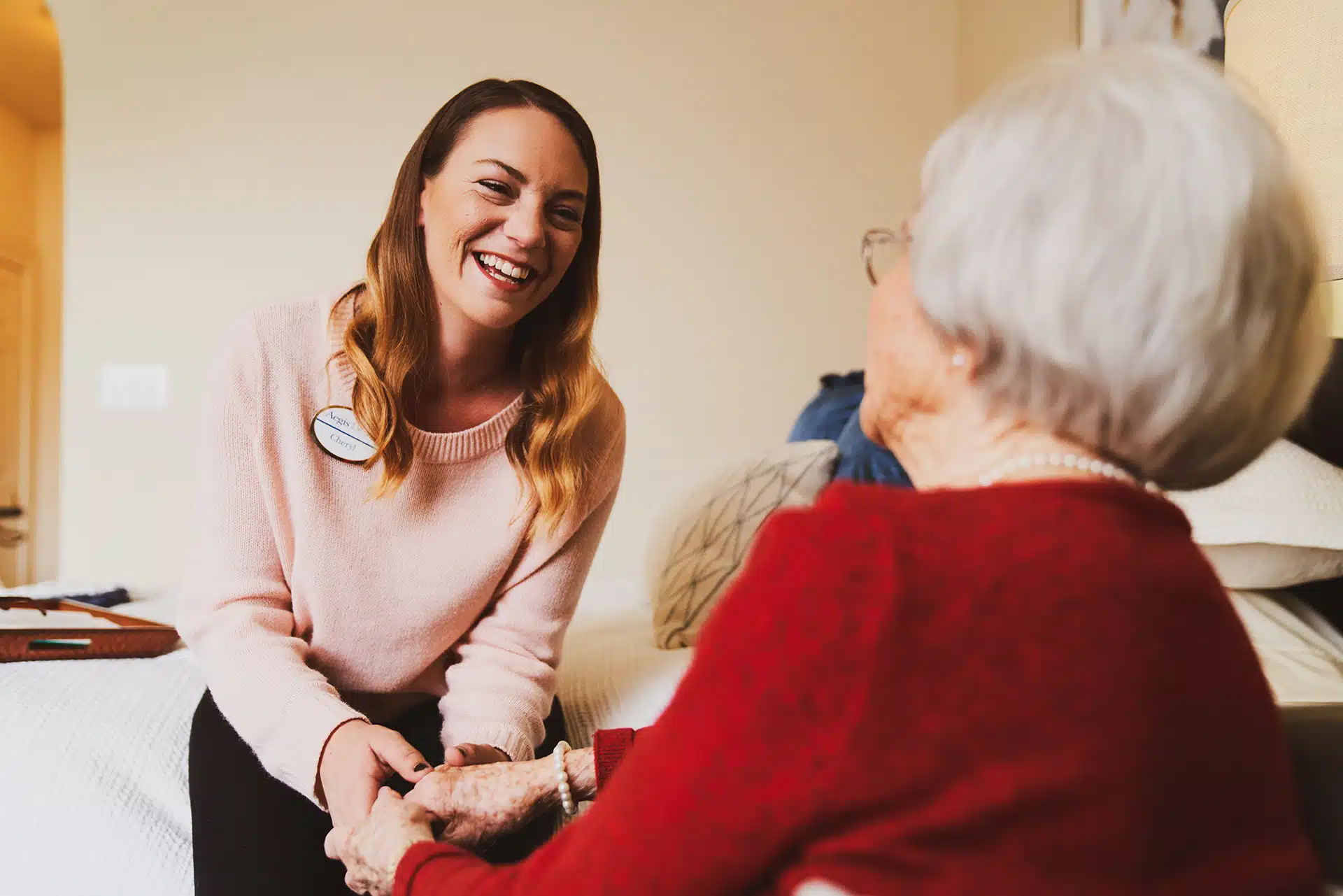
Caring for a family member with dementia is difficult. Not only do you grapple with the added responsibilities of monitoring another person’s life, but you also must come to terms with the idea that someone you love is going through a difficult change.
It’s not uncommon for caregivers to experience mixed emotions when caring for a loved one with dementia. Though we don’t immediately lose someone, we still experience the stages of grief: feeling anger, guilt, and sadness before we reach acceptance. Naturally, the prevailing emotion people feel when learning of a dementia diagnosis—their own or a loved one’s—is denial.
Laura Wayman – Dementia Whisperer
Laura Wayman, better known as The Dementia Whisperer, is a popular speaker in our communities whose ‘Loving Approach to Dementia Care’ seminar helps caregivers cope with new dementia diagnoses and changing conditions. She notes that denial kicks in when there’s something our mind can’t wrap itself around and figure out. The thought of watching a parent or spouse lose themselves can be too much to bear, so we use denial to cope with a change we can’t accept.
Wayman acknowledges a caregiver needs to feel their feelings regarding dementia diagnoses. It’s perfectly acceptable to experience the wave of emotions that can accompany a hard day or a successful day. She stresses that caregivers need to acknowledge the fact that we can’t stop, fix, or change dementia.
Though your loved one might have moments of clarity that make it easy to convince yourself they’re okay, it’s critical to recognize that changes are happening. Denying a diagnosis can cause your loved one harm, from operating a vehicle when they shouldn’t to becoming the victim of fraud.
Accepting your parent or spouse is changing, and that your life is changing as a result, will help you to see the bigger picture. Right now, one in five families deals with a dementia diagnosis. In the next ten to fifteen years, one in two families will have a loved one with dementia. Think of all the people who can relate to your struggles and frustrations.
Teepa Snow – Positive Approach
Dementia expert Teepa Snow, one of the world’s leading educators on dementia and care, finds the challenge in acceptance for many families is that they never volunteered for their new reality. The fear of the unknown is overwhelming but imagine the roller coaster of emotions your loved one is feeling.
“You can get on and off the train because you don’t have dementia, but you’re losing someone you care a lot about to it. Do you want to be on the train with them, or do you want them to travel alone?”
Once you’re ready to face your new reality, take steps to care for yourself. Join a support group to share experiences with other family caregivers or a trusted confidant. If you prefer to see a mental health professional, some counselors specialize in helping seniors and their family cope with change due to cognitive impairment.
Don’t forget to take care of yourself. Caregivers tend to ignore their needs. You have permission to ask for help or accept when someone offers support. You need to remain healthy to be the best caregiver for your loved one.
One great way to provide care for your loved one when you need time to work, travel, or take care of yourself is short-term care. Respite stays offer you peace of mind that your parent or spouse is in good hands when you need a little extra assistance. They’ll enjoy making new friends during meals, excursions, exercise classes, and programs catered to individuals with memory loss. If you’d like to learn more about respite stays, contact a Marketing Director at an Aegis Living community near you.
Learn what dementia is, how it’s diagnosed, and the most common types, including Alzheimer’s, Lewy body, vascular, frontotemporal, and mixed dementia. Whether your loved one is early in their journey…
Learn the subtle early signs of dementia across cognitive, behavioral, and physical changes. Catching symptoms early can lead to better care, planning, and support for your loved one.
Learn what Alzheimer’s disease is, how it differs from other forms of dementia, what symptoms to watch for, and how treatments and supportive care can help at every stage.
Don’t share my personal information/limit the use of my sensitive personal information. Áegis is committed to adhering to the WCAG and welcomes feedback from users on accessibility issues.
AUGi is a discreet, wall-mounted smart device that uses AI technology to track movement and detect potential fall risks. Whether sensing when someone is getting out of bed or recognizing that a fall has occurred, AUGi instantly alerts our care team so help arrives right away. This proactive approach gives residents added safety and families peace of mind.
Restore Red Light Therapy offers a safe, natural way to support health and vitality. This non-invasive treatment reduces inflammation, eases pain, improves mobility, enhances sleep, and rejuvenates skin. By promoting healing and energy at the cellular level, it helps residents feel their best—every single day.
Respite Care
Respite Stays & Day Stays give family caregivers a real break—hours, days, or a few weeks—while your loved one enjoys a safe, enriching short‑term home at Aegis Living. Guests settle into a beautifully furnished private apartment and have 24/7 care staff and onsite nurses, medication management, and discreet safety technology (motion sensors, medical‑alert pendants, visitor check‑in) for peace of mind. Each day feels purposeful with chef‑prepared, all‑day dining and 200+ monthly activities—from book clubs and fitness classes to movie nights—plus full use of the community. We coordinate with your loved one’s physicians to mirror their routines and care, so the stay feels familiar. It’s also a smart trial run for senior living: meet neighbors, test services, and see what supported independence looks like—without a long‑term commitment. Choose a Respite Stay when you’re traveling or need time to recharge, when your loved one would benefit from structure, social connection, and great meals, or when you both want peace of mind while keeping options open.
Hospice & End‑of‑Life Care at Aegis Living is comfort‑first support for the final stage of life, delivered in your loved one’s private apartment by our 24/7 care team in coordination with a trusted local hospice provider you choose (or we can recommend). Together, we create a coordinated care plan that manages pain and other symptoms, oversees medications, and provides calm, dignified help with daily needs, while offering compassionate emotional support for both resident and family. Discreet safety measures and a reliable medical‑alert system bring help quickly; chef‑prepared, in‑apartment meals adapt to changing appetites. Families are guided through decisions and moments of closure so they can focus on being present in a peaceful, home‑like setting. If your loved one already lives at Aegis, they can remain in the comfort of their home, avoiding disruptive moves. Choose this level of care when curative treatment is no longer the goal and you want expert symptom control, hands‑on daily support, and a setting that protects dignity and prioritizes comfort, meaning, and time together.
Transitional Care is Aegis Living’s bridge for early memory loss—made for people who are still social and independent but benefit from structure, reminders, and gentle support. Residents remain in assisted living with full access to amenities and friendships, while dementia‑trained team members are available 24/7 for cueing, medication management, wayfinding, and compassionate redirection when confusion arises. Onsite nurses monitor health and adjust a personalized care plan as needs evolve, and discreet safety technology like motion sensors, medical‑alert pendants, and a visitor check‑in system, adds reassurance without sacrificing freedom. Nutrition and hydration stay on track with chef‑prepared meals, seasonal menus, and all‑day options, and days are filled with meaningful activities that build confidence and connection. Couples can stay together even with different care needs. If symptoms progress, a seamless transition to our secured Life’s Neighborhood Memory Care is available with the same trusted team. Choose Transitional Care when your loved one is missing medications, repeating questions, or feeling anxious alone but does not yet require a secured Memory Care setting—it’s the right support, at the right time.
Memory Care is specialized, secure support for people living with Alzheimer’s or other dementias who benefit from a calm, structured environment and round‑the‑clock expertise. At Aegis Living, that care happens in Life’s Neighborhood—an intimate, thoughtfully designed setting where 24/7 dementia‑trained caregivers and a nursing team on site seven days a week deliver personalized help with daily living, medication management, and mobility (including Hoyer lifts and two‑person transfers), while gently redirecting agitation and confusion. Days are purpose‑filled with science‑based cognitive programming, certified music therapy, and social activities; chef‑prepared meals are easy to enjoy and dining spaces and cues are designed for memory support. Discreet safety features like secured entrances, emergency pendants with fall detection, and optional motion sensors, prevent wandering and bring peace of mind, and visiting physicians and wellness professionals reduce trips off‑site. Families receive education and ongoing support. If your loved one is unsafe alone, missing medications, wandering, needs frequent cueing or hands‑on help with bathing or dressing, or thrives with a predictable routine, Memory Care offers the right level of care. For milder needs, our transitional Assisted Living can be a first step; for advancing symptoms, secured Memory Care provides the specialized, heartfelt support to help them feel calm, connected, and at home.
Assisted Living is ideal when you—or a loved one—want to stay independent but need daily help to live safely and well. It combines a private apartment with 24/7 caregivers who provide personalized support with activities of daily living (bathing, dressing, medications, mobility, including two‑person transfers and Hoyer lifts when needed). A nursing team on site seven days a week builds a tailored care plan, with visiting physicians and onsite physical, occupational, and speech therapy available for added peace of mind. Meanwhile, we handle the details like chef‑prepared, dietitian‑designed all‑day dining, housekeeping, laundry, transportation, and concierge services, so residents can focus on community and purpose in beautifully designed spaces with fitness classes, clubs, and daily activities. Care scales up or down as needs change (so you only pay for the support you use). If you don’t require the constant medical care of a nursing home but want more help than independent living provides, Assisted Living delivers the care, comfort, and community to help you thrive.
Light Assisted Living is for adults who are largely independent and want the ease of maintenance‑free living with a trusted safety net close by. You’ll keep your own routine in a private apartment while we handle the hassle like chef‑prepared, dietitian‑designed all‑day dining, weekly housekeeping and laundry, concierge help, and scheduled transportation to appointments and outings. Our on‑site team is available 24/7 for occasional support—think medication reminders, a steady arm for bathing or dressing, or short‑term help after an illness—without the intensity of higher‑level care. Stay active with a full calendar of fitness, arts, clubs, and curated excursions; stay well with visiting physicians and optional physical, occupational, and speech therapy through our EmpowerMe Wellness partnership. Emergency call systems, elevators, and discreet mobility support add peace of mind. It’s the right fit if you don’t need Memory Care or frequent hands‑on assistance, but want community, convenience, and the assurance that more support can scale up if your needs change. Couples with different care needs can remain together with personalized plans.
Your Privacy Matters
We use cookies to analyze traffic and improve your experience. You can accept all, reject non-essential, or manage your preferences. Privacy Policy