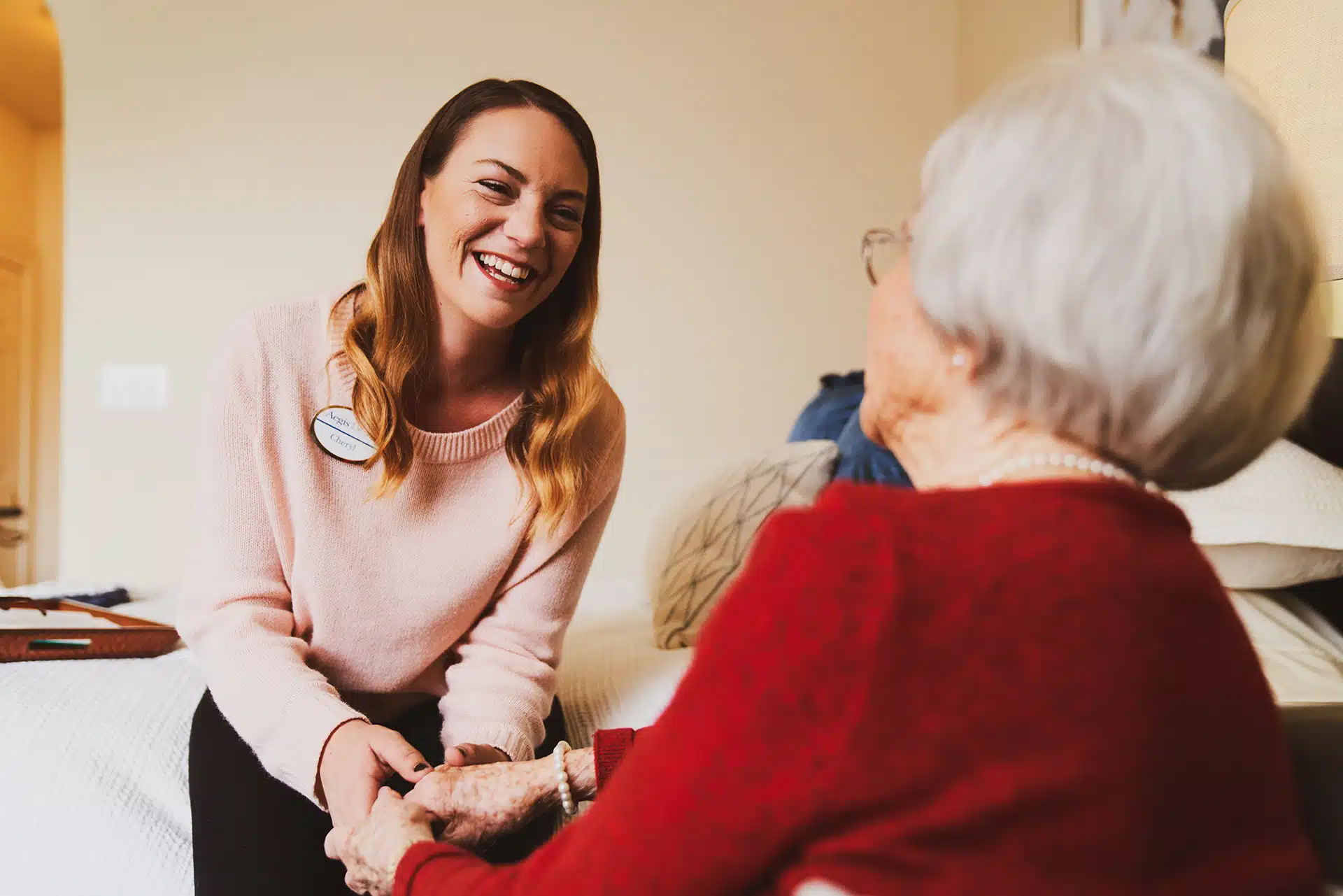
Perhaps your mom has lost a significant amount of weight recently because she is no longer cooking and her cupboards are bare. Or you realize that your dad is depressed after losing his wife and no longer socializes with friends. If your family has reached the point where your parent can no longer live independently, it is time to research your options for their care. Depending on their needs, one good option for your family may be to move your parent into an assisted living or memory care community.
If they need round-the-clock assistance with the tasks of daily living, such as dressing, bathing, toileting, and grooming, then an assisted living community can help preserve your parent’s independence as much as possible. If your loved one is experiencing memory loss, they may no longer be safe to live on their own and a memory care community can assist with their unique needs. There are many reasons to move your parent into an assisted living community but visiting several locations is helpful for your family to determine the best fit.
We suggest that you schedule an assisted living tour. Afterward, if you are still interested in that community, then pop-in for a second visit to make sure your expectations are still met when your visit is unplanned. We also suggest that you tour at different times of the day. You want to ensure that your mom or dad will be mentally stimulated and physically active throughout the day. And you will want to see the interactions between residents and a variety of care staff.
This assisted living tour checklist will help you know what to look for, what to ask and who to meet.
Morning:
Are residents awake and dressed? Even though they may need help or are experiencing memory loss, your parent should be treated with the dignity they deserve. Residents should be in clean clothes for breakfast, hair combed, teeth brushed, and ready for their day. If residents don’t look groomed, this could mean that their care is neglected in other areas. Of course, there are always exceptions to this rule but you should look for overall personal grooming of the residents, well-attended breakfast in the dining room, and staff friendliness. Also, it stands to reason, that the community should be clean—especially at the start of the day before residents have begun activities.
Mid-Day:
Are residents active? It’s normal for seniors to nap more, but they should not be sleeping all day out of boredom. Seniors in an assisted living community should be engaged in activities throughout the day to involve them mentally and encourage them to get their blood pumping. If it’s a sunny day, are the residents outdoors and enjoying the fresh air? This is a good time to check the security and safety of the outdoor space. Is there a calendar of events posted to show the different activities throughout the day for you to review? Family members tend to visit during the day, ask other families about their opinion of the community.
Evening:
Are residents interacting around the dinner table? It might be helpful for you or a family member to visit during a meal to taste the quality and see the variety of meals offered. Does the food look fresh, colorful, nutritious, and balanced on the plate? Are the staff open, friendly, and inviting? Follow your instincts and ask plenty of questions.
One important note if you are visiting a memory care community in the evening, there is a very normal symptom of those with dementia called sundowning. This might not be something that you are familiar with or perhaps your mom or dad has not had this issue yet. Sundowning is a noticeable change in behavior or marked confusion in someone with dementia that seems to be triggered in the evening as the light outside fades. It can cause a number of behavioral issues that are normal and not the fault of the community. But if someone is experiencing behavior issues, it would be good for you to see how these behaviors are handled and how the residents are redirected.
Interested in an assisted living tour of our Washington, California or Nevada communities? Contact us today.