Aegis Living - Senior Care

10 Tips To Protect Seniors From Financial Fraud

woman reading with magnifier

Millions of our aging senior population will fall prey to scams, fraud, and identity theft every year. Because older adults are more trusting of people whom they don’t know and often are open to chatting with others because of isolation, they are more vulnerable to these types of scams. Some seniors may also have cognitive issues that affect their judgment and reason. In addition, as seniors become less mobile and physically strong, they invite in more personal services and help into their lives and homes.  These set of factors can leave them susceptible to fraud or a stolen identity.

According to the National Council on Aging (NCOA), there are prominent scams targeting seniors currently that have cost some billions of dollars this year.  Start a conversation and share these scams with your loved ones to protect their wallet and identity.

Current Scams

  • Fraudulent phone calls from the Social Security Administration (SSA).  There has been a recent uptick in the number of phone calls that threaten arrest or legal actions if the caller does not return their call or press a number to be connected to the SSA.  Another take on this scam, the caller will offer to help to activate their suspended social security number.  The important takeaway is that the SSA will rarely call someone directly unless they have ongoing business with that person, and they will not threaten arrest over the phone.   The best course of action is to hang up at once.  
  • Natural disaster scams.  Devastating natural disasters, like wildfires, earthquakes, hurricanes, and tornadoes, can bring out the worst and best in people.  Scammers have found new opportunities to target both those who want to help support during a time of need and those directly affected by the disaster.  There are a variety of ways that they connect with people—by phone, email, or even in person.   Sometimes they are impersonating a charity to get money or personal information.  They may set up a fake website that looks closely like a legitimate charity. Or they may collect personal information as the “IRS” looking to help file loss claims. It’s best to thoroughly vet any charity that you wish to support and lean on reputable resources if you are a victim of a disaster.   
  • Grandchild in trouble scam updated.   This scam happens when the caller notifies an elderly adult that their grandchild has been in a car accident or is in jail and needs money immediately.  Although this scam has been around for years, fraudsters are now asking for cash instead of wire transfers or gift cards.  Seniors are asked to divide cash into envelopes and place them in the pages of a magazine that they mail or ship  The best action to take is not acting right away but to hang up and contact your grandchild or family members to verify they are safe.  If you have mailed cash, contact the post office or shipping service to stop delivery.  And file a complaint with the Federal Trade Commission

Those three scams may be prominent this year, but there are many more scammers looking for other opportunities to target vulnerable seniors—both online and offline. Help protect your loved one from becoming a victim by sharing with them these helpful tips:

Ten Tips to Avoid a Scam

  1. Do not allow anyone but a trusted family member, friend, or professional financial adviser to handle your personal finances or banking. Do not make a large financial purchase or investment without consulting an independent, trusted loved one or financial adviser.
  2. Never give out your PIN, social security number, bank account, Medicare, or credit card over the phone, unless you have initiated contact and know the company that you are speaking to. Never send this information via email. Do not toss in the trash any documentation that includes this type of information.  We recommend shredding these types of documents.
  3. Get recommendations from friends or family for reputable help or services, such as gardening, housekeeping, or meal prep, who may be entering your home.   If you need an in-home care provider, work with an established agency, or request references and get a background check if you are personally hiring someone.
  4. Be careful of door-to-door sales. Most reputable companies no longer use this practice.
  5. Be cautious of high-pressure sales pitches with too much urgency. Slow down and don’t feel threatened to act immediately.
  6. Never sign a contract without clearly understanding the terms of the agreement. And be skeptical of free trial offers and make sure you clearly understand their cancellation policy.
  7. Unexpected notifications by phone or email that you have won a trip, prize, or money are typically a hoax.  Unless you have specifically entered yourself, contact made in this way should be a red flag.
  8. Do not assume that all charity organizations are legitimate. Research a charity before donating.
  9. Sign up for identity theft protection to monitor personal and financial information. If there is an issue, this type of protection can provide aid and assistance to an individual.
  10. Use precautions with your financial information online. Shop with retailers that are well-known companies.  If you are making an online purchase, make sure the website is safe—review their privacy policy and make sure they use encryption (look for lock symbol).  And if you must create a password, make sure it is at least eight characters long and includes some upper- and lower-case letters, numbers, and special characters.  

If you or your loved one have been scammed or are concerned that you might be the victim of a scam, don’t be afraid to talk about it with someone you trust. Seek help because doing nothing could have huge financial consequences. For first steps, we suggest that you immediately:

  • Call your bank or your credit card company
  • Cancel any credit card or debit card linked to the account
  • Reset your passwords and personal identification numbers

At Aegis Living, we strive to protect vulnerable seniors and support the efforts of the FTC to curtail the spread of scams.  Through their Pass It On campaign, you can help protect other seniors from scams by sharing what you know to prevent them from becoming a victim, providing resources to help spread the word about scams within your communities, and reporting any scams to the FTC.  You can also sign up to receive free scam email alerts from the FTC to get the latest tips and advice to protect your family.


<< Back to Blog

Related Posts

Aegis Living Footer Logo - Home Page
We care for your family like they are our own.
Don’t share my personal information/limit the use of my sensitive personal information.
Áegis is committed to adhering to the WCAG and welcomes feedback from users on accessibility issues.
415 118th Avenue SE, Bellevue, WA, 98005. Áegis Living © 2026. All Rights Reserved.

Share Your Story

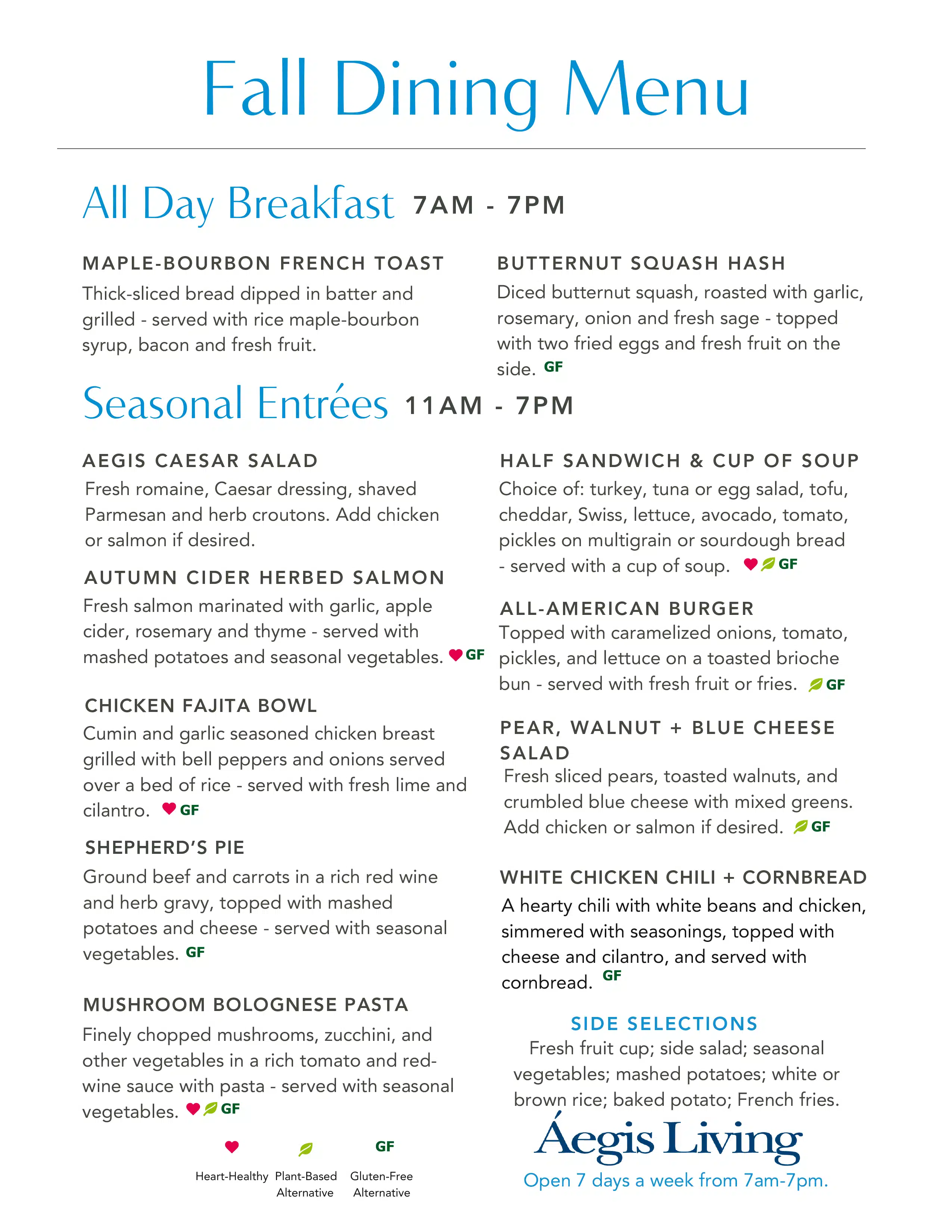
Fall dining menu with breakfast and seasonal entrées.
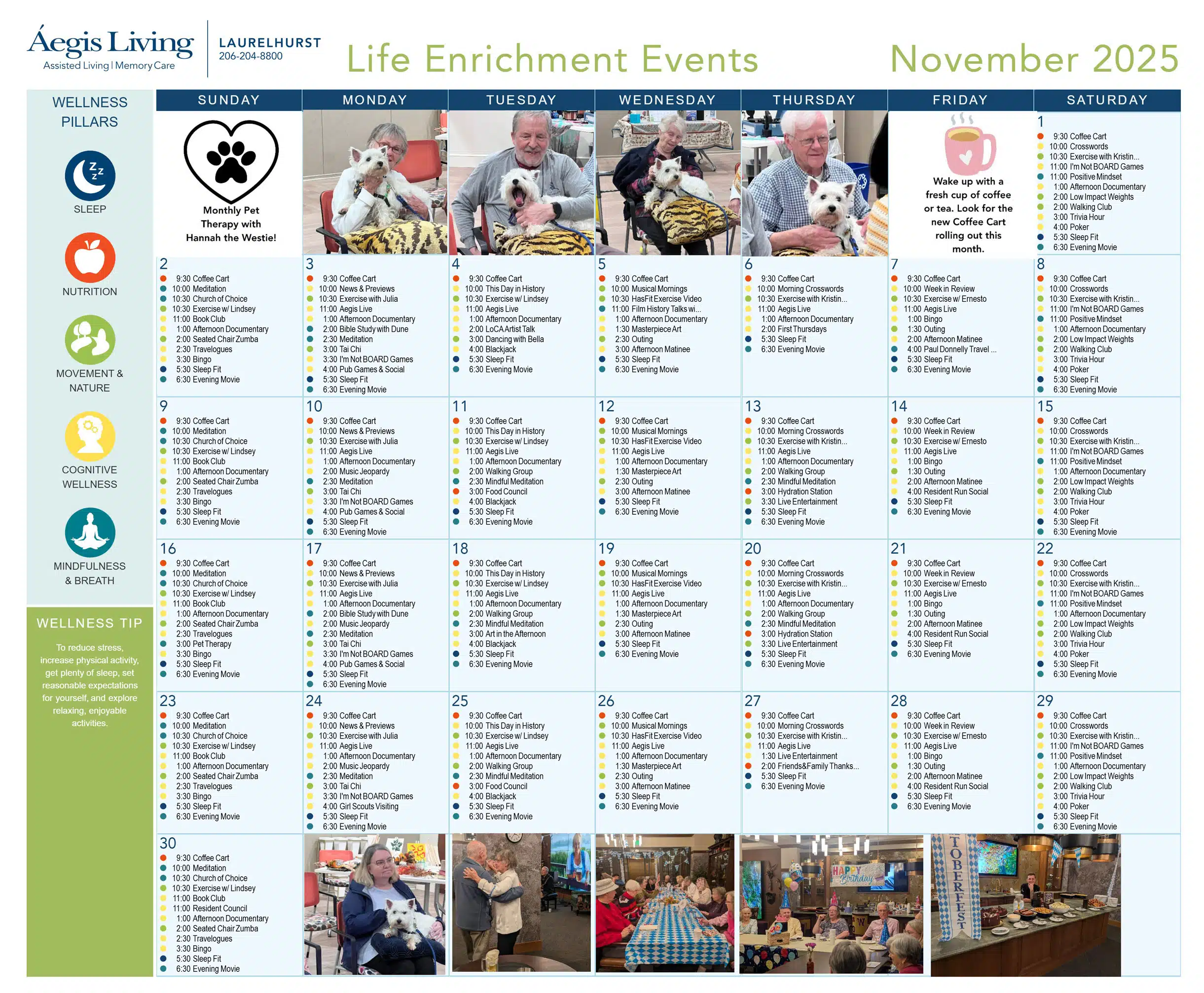
Aegis Living November 2025 events calendar with activities.
AUGi is a discreet, wall-mounted smart device that uses AI technology to track movement and detect potential fall risks. Whether sensing when someone is getting out of bed or recognizing that a fall has occurred, AUGi instantly alerts our care team so help arrives right away. This proactive approach gives residents added safety and families peace of mind.
Restore Red Light Therapy offers a safe, natural way to support health and vitality. This non-invasive treatment reduces inflammation, eases pain, improves mobility, enhances sleep, and rejuvenates skin. By promoting healing and energy at the cellular level, it helps residents feel their best—every single day.

Respite Care

Respite Stays & Day Stays give family caregivers a real break—hours, days, or a few weeks—while your loved one enjoys a safe, enriching short‑term home at Aegis Living. Guests settle into a beautifully furnished private apartment and have 24/7 care staff and onsite nurses, medication management, and discreet safety technology (motion sensors, medical‑alert pendants, visitor check‑in) for peace of mind. Each day feels purposeful with chef‑prepared, all‑day dining and 200+ monthly activities—from book clubs and fitness classes to movie nights—plus full use of the community. We coordinate with your loved one’s physicians to mirror their routines and care, so the stay feels familiar. It’s also a smart trial run for senior living: meet neighbors, test services, and see what supported independence looks like—without a long‑term commitment. Choose a Respite Stay when you’re traveling or need time to recharge, when your loved one would benefit from structure, social connection, and great meals, or when you both want peace of mind while keeping options open.

Hospice Care

Hospice & End‑of‑Life Care at Aegis Living is comfort‑first support for the final stage of life, delivered in your loved one’s private apartment by our 24/7 care team in coordination with a trusted local hospice provider you choose (or we can recommend). Together, we create a coordinated care plan that manages pain and other symptoms, oversees medications, and provides calm, dignified help with daily needs, while offering compassionate emotional support for both resident and family. Discreet safety measures and a reliable medical‑alert system bring help quickly; chef‑prepared, in‑apartment meals adapt to changing appetites. Families are guided through decisions and moments of closure so they can focus on being present in a peaceful, home‑like setting. If your loved one already lives at Aegis, they can remain in the comfort of their home, avoiding disruptive moves. Choose this level of care when curative treatment is no longer the goal and you want expert symptom control, hands‑on daily support, and a setting that protects dignity and prioritizes comfort, meaning, and time together.

Transitional Care

Transitional Care is Aegis Living’s bridge for early memory loss—made for people who are still social and independent but benefit from structure, reminders, and gentle support. Residents remain in assisted living with full access to amenities and friendships, while dementia‑trained team members are available 24/7 for cueing, medication management, wayfinding, and compassionate redirection when confusion arises. Onsite nurses monitor health and adjust a personalized care plan as needs evolve, and discreet safety technology like motion sensors, medical‑alert pendants, and a visitor check‑in system, adds reassurance without sacrificing freedom. Nutrition and hydration stay on track with chef‑prepared meals, seasonal menus, and all‑day options, and days are filled with meaningful activities that build confidence and connection. Couples can stay together even with different care needs. If symptoms progress, a seamless transition to our secured Life’s Neighborhood Memory Care is available with the same trusted team. Choose Transitional Care when your loved one is missing medications, repeating questions, or feeling anxious alone but does not yet require a secured Memory Care setting—it’s the right support, at the right time.

Memory Care

Memory Care is specialized, secure support for people living with Alzheimer’s or other dementias who benefit from a calm, structured environment and round‑the‑clock expertise. At Aegis Living, that care happens in Life’s Neighborhood—an intimate, thoughtfully designed setting where 24/7 dementia‑trained caregivers and a nursing team on site seven days a week deliver personalized help with daily living, medication management, and mobility (including Hoyer lifts and two‑person transfers), while gently redirecting agitation and confusion. Days are purpose‑filled with science‑based cognitive programming, certified music therapy, and social activities; chef‑prepared meals are easy to enjoy and dining spaces and cues are designed for memory support. Discreet safety features like secured entrances, emergency pendants with fall detection, and optional motion sensors, prevent wandering and bring peace of mind, and visiting physicians and wellness professionals reduce trips off‑site. Families receive education and ongoing support. If your loved one is unsafe alone, missing medications, wandering, needs frequent cueing or hands‑on help with bathing or dressing, or thrives with a predictable routine, Memory Care offers the right level of care. For milder needs, our transitional Assisted Living can be a first step; for advancing symptoms, secured Memory Care provides the specialized, heartfelt support to help them feel calm, connected, and at home.

Assisted Living

Assisted Living is ideal when you—or a loved one—want to stay independent but need daily help to live safely and well. It combines a private apartment with 24/7 caregivers who provide personalized support with activities of daily living (bathing, dressing, medications, mobility, including two‑person transfers and Hoyer lifts when needed). A nursing team on site seven days a week builds a tailored care plan, with visiting physicians and onsite physical, occupational, and speech therapy available for added peace of mind. Meanwhile, we handle the details like chef‑prepared, dietitian‑designed all‑day dining, housekeeping, laundry, transportation, and concierge services, so residents can focus on community and purpose in beautifully designed spaces with fitness classes, clubs, and daily activities. Care scales up or down as needs change (so you only pay for the support you use). If you don’t require the constant medical care of a nursing home but want more help than independent living provides, Assisted Living delivers the care, comfort, and community to help you thrive.
Light Assisted Living is for adults who are largely independent and want the ease of maintenance‑free living with a trusted safety net close by. You’ll keep your own routine in a private apartment while we handle the hassle like chef‑prepared, dietitian‑designed all‑day dining, weekly housekeeping and laundry, concierge help, and scheduled transportation to appointments and outings. Our on‑site team is available 24/7 for occasional support—think medication reminders, a steady arm for bathing or dressing, or short‑term help after an illness—without the intensity of higher‑level care. Stay active with a full calendar of fitness, arts, clubs, and curated excursions; stay well with visiting physicians and optional physical, occupational, and speech therapy through our EmpowerMe Wellness partnership. Emergency call systems, elevators, and discreet mobility support add peace of mind. It’s the right fit if you don’t need Memory Care or frequent hands‑on assistance, but want community, convenience, and the assurance that more support can scale up if your needs change. Couples with different care needs can remain together with personalized plans.