Your favorite band from your freshman year at college, the song for your first dance as a married couple, the nursery rhymes that you played for your children, or the tune that makes you feel like dancing in the kitchen – these songs hold memories, emotions, and glimpses of your life. Music has a way of transcending time and space. A favorite tune can make you laugh, smile, or cry. Music has a power you can tap into to make someone feel better or recall a fond memory.
Within our assisted living communities, we use music in ways to enhance the daily lives of our residents. It is a useful tool for anyone, especially those with memory loss or cognitive challenges. It is a universal way to touch someone and evoke a feeling.
For Exercise
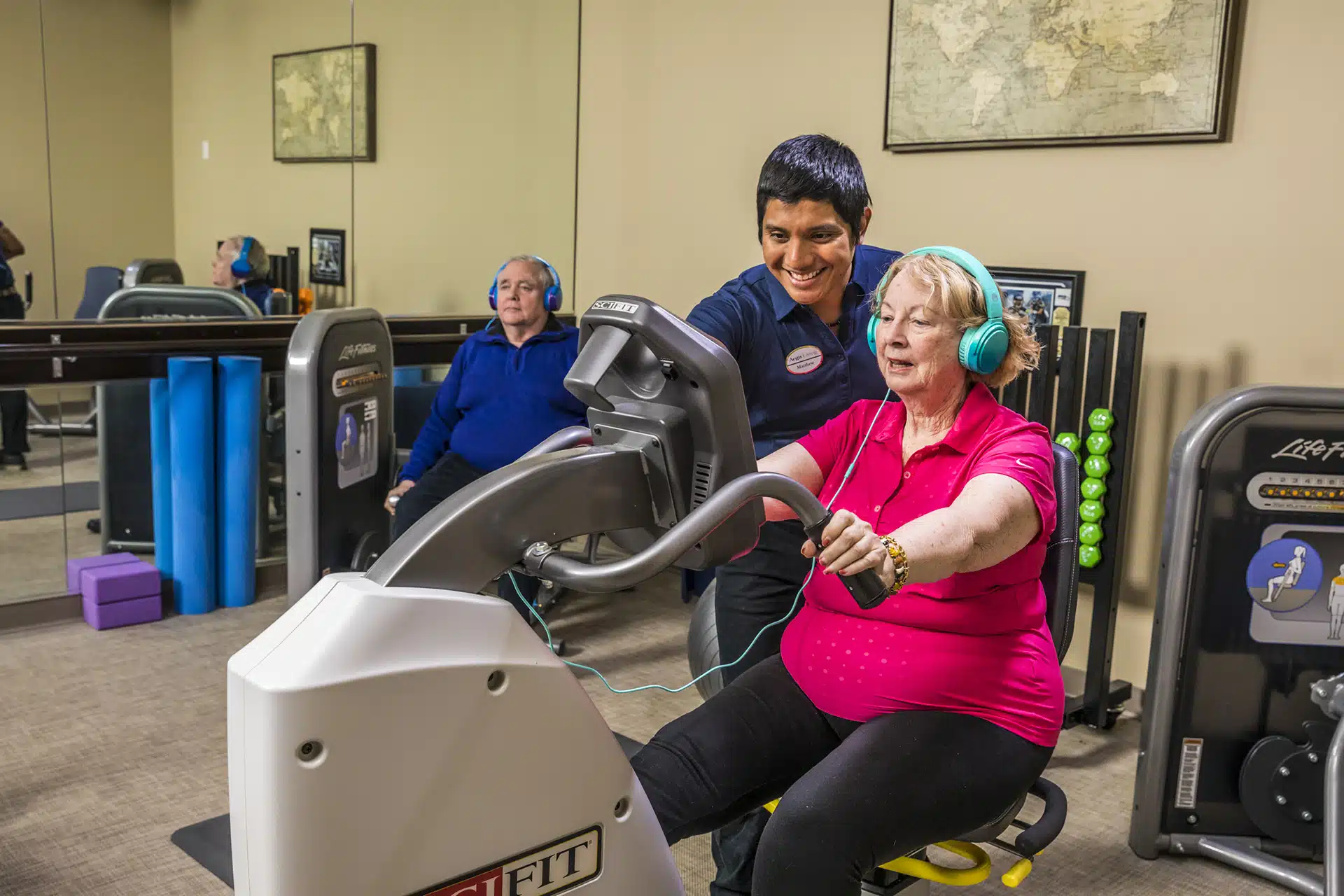
We use music to get our seniors up and moving. When we play an upbeat song from this generation’s youth, their toes will start tapping, and they will clap or sing along. Music is a great way to get your aging parent out of the comfort of their chair and move to the music. Dancing to your favorite song is so much fun that it doesn’t feel like exercise.
Create a repertoire of your spouse’s favorite music, whether that is classical, opera, country, or even classic rock. They will appreciate sharing this with you and reminiscing about when they first heard a specific singer or band. Play music while you are cooking in the kitchen, to dance to in the living room, or to get things shaking as you dust the house. Combine their favorite song with light activity, and you can get some steps in and a task done. Music has shown to promote physical activity that can lead to increased mobility and better coordination. So don’t feel like you have to go to the gym, just get up and show off those dance moves!
For Wellbeing
There is growing evidence that shows when older adults engage with music that it positively contributes to their sense of wellbeing and positivity. If your aging parent listens to music, they will have a happier outlook on life according to some studies. Music has proven to enhance one’s mood and contribute to better overall health. The benefits of music have been attributed to a better night’s sleep and diminished pain. Researchersfrom Finland discovered that patients who listened to music had a faster recovery after a stroke.
Music can also be a great stress reducer. Music is able to calm those who are stressed or agitated. It can promote relaxation, reduce tension, and ease anxiety. Music has even been shown to lower blood pressure. Music can be a tool at your disposal as a caregiver to instantly calm, refocus, or change a bad mood.
For Creativity
Perhaps your loved one is a musician or played an instrument when they were younger, music can be an excellent way for a senior to express their creativity or share their talent with others. Although they may have slowed down or maybe they don’t remember all the words to a song, they will remember how music made them feel. If they can no longer sit and play the piano or a guitar, you can have them try a noise maker, harmonica, or drums to play along with a song. Or perhaps they love to sing, turn up the music and join them in a sing-along. On your next trip in the car to run errands or for a doctor’s appointment, have some of their favorite songs queued up to sing in the car. They will appreciate being able to be creative and participate in the fun of creating music.
For Memory
Those with Alzheimer’s or another form of dementia can significantly benefit from music therapy. Music has been known to trigger a memory to encourage reminiscing and communication. Music reaches those with memory loss who are no longer verbal. Whether your parent is a Sinatra, Elvis, or Hank Williams fan, music can spark a lost memory or transport them to another time and place. When your loved one seems distant and detached due to memory loss, music is a great way to connect with them.
Integrate Music into Your Day
- Have a sing-along to nursery rhymes with your children and parent. What a fun intergenerational way to interact together.
- Create a favorite playlist. With the internet, it is easier than ever to find music from any era or genre available for download. Play this in your house, the car, or whenever you want to redirect their mood.
- Have a dance party in the kitchen or wherever it seems like a good idea. Encourage your parent to dance and sing along with a favorite oldie.
- Have a chill-out playlist to help wind down at the end of the day. Music can help them to relax and prepare for bed. Soft music makes for a calming transition to bedtime.
- Find live music in your community. Find a brown bag lunch concert, a high school musical, or live music at a senior center to enjoy together.
- Buy an instrument or have musical instruments accessible to your loved one if they are musically inclined. They may enjoy picking up a tambourine, harmonica, drums, or strumming along on a guitar.
Twirl, spin, and shake your way to a better mood. Get up and dance for a little exercise. Or remember a fond memory through an old song. However you use music in your daily life, it can help you through a long day of caregiving with joy and fun.
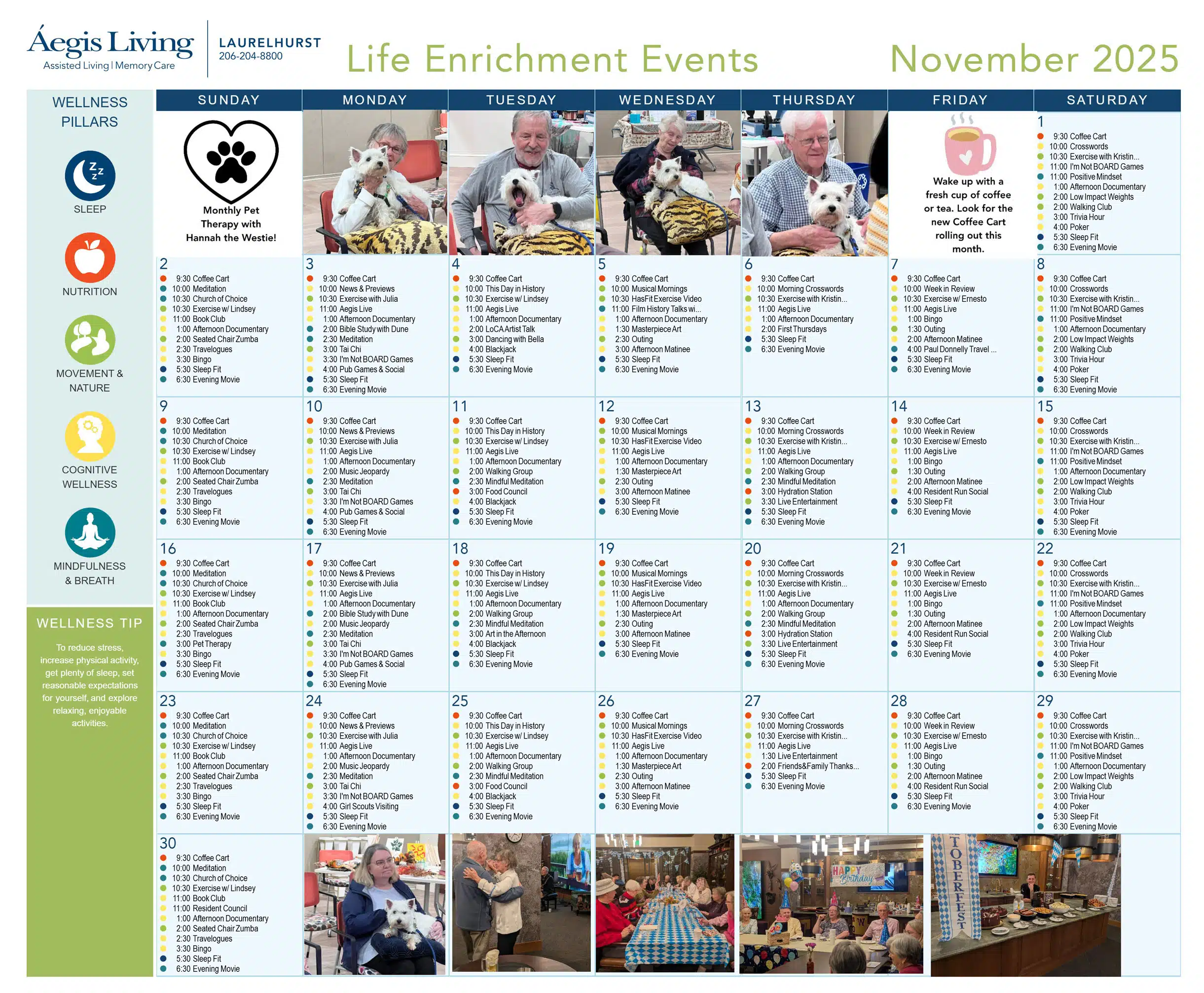
Contact the Aegis Living near you and ask how we integrate music into our Life Enrichment programs.