Warning Signs of a Stroke
Discover how to lower your risk, identify early warning signs using the F.A.S.T. acronym, and find specialized medical care for stroke recovery.
By Áegis Living Editorial Team · Published · Updated · 3 min read
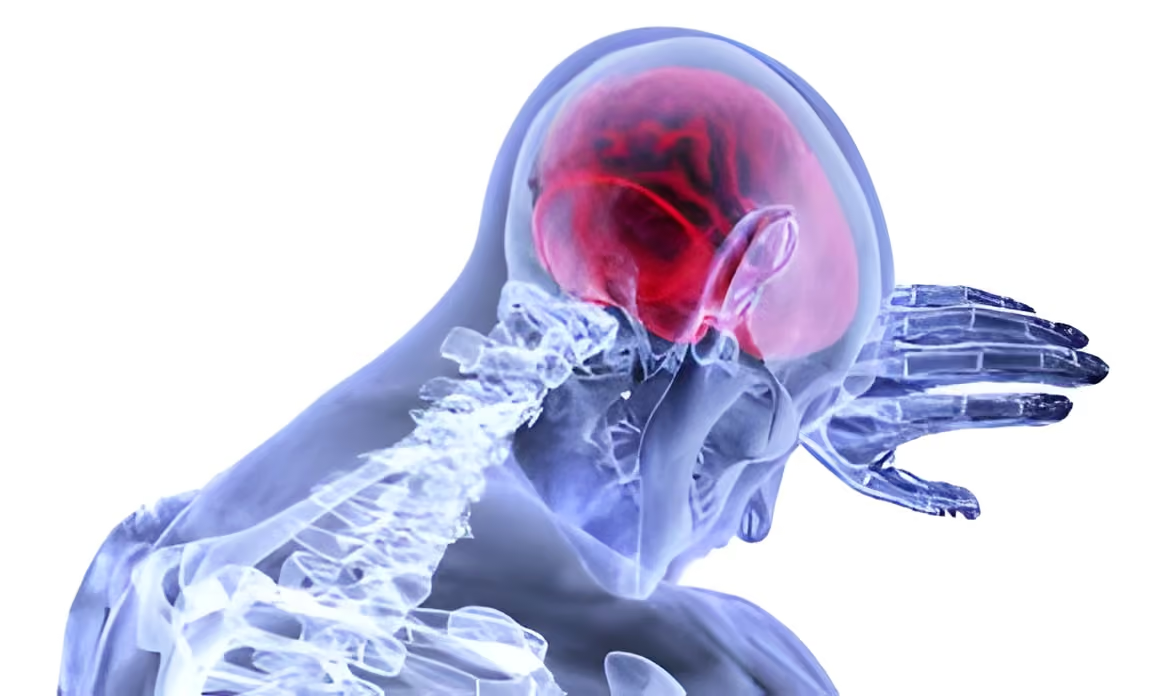
Did you know that a cerebrovascular incident is the leading cause of serious long-term disability and the fifth leading cause of death in the United States? While the physical risk increases as we age, these medical emergencies can strike anyone at any time. Fortunately, they are highly preventable and treatable if you know how to act F.A.S.T.
What is a Stroke?
An attack occurs when vital blood flow to the brain is suddenly blocked or disrupted. Brain cells begin to die within minutes when deprived of oxygen, immediately causing recognizable stroke symptoms. There are two major variations:
Ischemic: Making up 87% of cases, this happens when a blood clot blocks circulation to the brain.
Hemorrhagic: This occurs when a weakened blood artery within the brain ruptures.
Key Risk Factors
Several underlying medical conditions can trigger an event. A Transient Ischemic Attack (TIA), often referred to as a "mini-stroke," serves as a critical warning sign of a future occurrence. While TIAs only block blood flow for a brief window, they require urgent attention; over a third of individuals who experience a TIA without treatment suffer a major emergency within a year.
High blood pressure, high cholesterol, heart disease, diabetes, and sickle cell disease all elevate your vulnerability. According to the official CDC Stroke Data and Statistics, monitoring these underlying health conditions is critical to understanding overall national and personal risk profiles. If you are managing these conditions, partner with your physician or a senior-focused geriatrician to build a preventive care plan. Your family history, age, sex, and race or ethnicity also play a role in your baseline risk.
Act F.A.S.T. to Save a Life
The most efficient method to memorize the four primary stroke symptoms is the F.A.S.T. acronym. If you notice someone exhibiting these warning signs, call 9-1-1 immediately:
F — Face: Ask the person to smile. Look to see if one side is drooping or uneven.
A — Arm Weakness: Ask them to raise both arms. Does one arm drift downward?
S — Speech: Ask the individual to repeat a simple phrase. Listen for slurred or difficult speech.
T — Time to Call 9-1-1: If they display any of these indicators, seek emergency hospital care right away.
Other Stroke Symptoms You Should Know
Beyond the F.A.S.T. protocol, secondary neurological indicators can surface. Be on high alert if you observe:
Sudden numbness or weakness in the face, arm, or leg (especially on one side of the body).
Sudden confusion or difficulty understanding spoken language.
Sudden vision problems in one or both eyes.
Difficulty walking, dizziness, or a sudden loss of balance and coordination.
A sudden, severe headache with no known cause.
Difficulty swallowing, sudden muscle stiffness, or involuntary eye movements.
Lowering Your Total Risk
Up to 80% of these medical crises are preventable by implementing healthy lifestyle choices. As outlined by the American Stroke Association Guide on Stroke Prevention, lifestyle modifications are your strongest defense. Prioritize a diet low in saturated and trans fats but high in fiber. Limit your daily sodium intake and aim for 2.5 hours of moderate physical activity each week. If you smoke, seek cessation resources, and limit alcohol consumption.
The Path to Rehabilitation
Recovery timelines vary significantly. Some individuals recover within weeks, while others manage long-term disabilities for years. Speech, physical, and occupational therapies are crucial for regaining daily functions. Because survivors face a high risk of recurrence, working closely with your primary care provider or a specialized geriatrician is essential to address the root causes and protect your long-term health.
If you suspect someone is experiencing sudden stroke symptoms, do not hesitate. Your fast action can save a life!
Related reading
- Four Tips for an Elderly Parent Diagnosed with Diabetes
According to the American Diabetes Association, more than one-quarter of the adults in America over the age of 65 have diabetes (types 1 or …
- How Smoky Air Quality Can Affect the Health of Seniors
Wildfire smoke can create added health concerns for older adults, making indoor precautions and close attention to symptoms especially impor…
- How Hearing Loss Can Affect Older Adults in Daily Life
Hearing changes can influence communication, safety, and social connection, but support and appropriate care can make daily life easier.…
- Understanding Vision Loss and Supporting Senior Independence
Learn how vision loss can affect daily life and discover practical ways to support safety, confidence, and independence for older adults.…
Have questions about senior living?
Our family care advisors are here to help — no pressure, no script.